Hyper Local Content - How To Level Up Your Local SEO Strategy
Local SEO has gotten more competitive, especially in recent years. Because of that, we have had to continue to niche down farther and farther. From targeting cities, to parts of cities, to neighborhoods, and sometimes, even specific blocks. Getting hyper local can be confusing and you do not want to waste your time. Here is a guide on what hyper-local SEO is and how to capitalize on your micro-market.
1. What is Hyper-Local SEO?
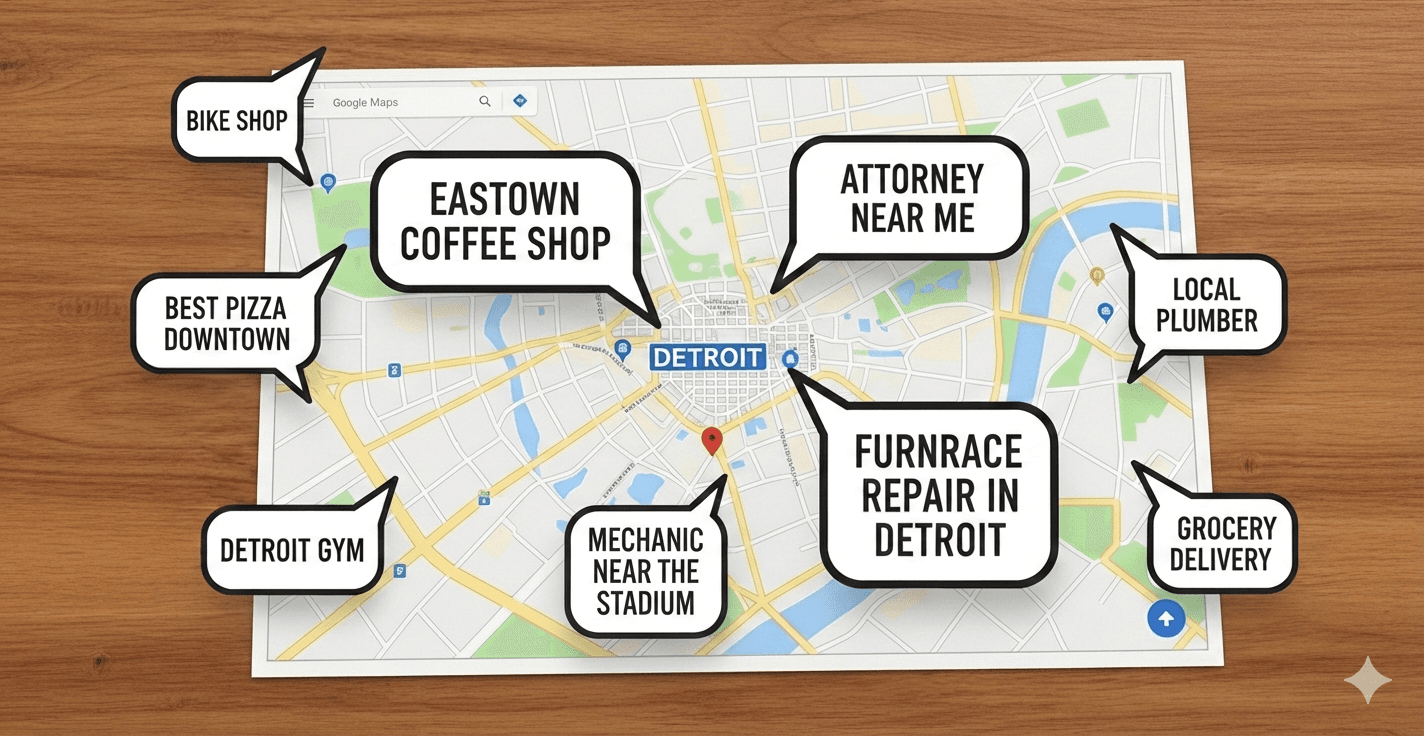
While standard Local SEO might target "Plumbers in Chicago," Hyper-Local SEO targets "Emergency plumber in Logan Square" or "Leaky faucet repair near Palmer Square Park."
It focuses on:
- Neighborhoods and Districts: Specific community names.
- Landmarks: Proximity to parks, stadiums, or transit hubs.
- Street-Level Intent: Capturing the "right here, right now" searcher.
In 2026, AI-driven search models prioritize proximity and real-world relevance. If you aren't signaling that you belong to a specific neighborhood, you're invisible to the most profitable local traffic.
2. The Powerhouse: Google Business Profile (GBP)
Your Google Business Profile is no longer just a listing; it’s your digital storefront. In a world of "zero-click" searches, most customers will find what they need without ever visiting your website.
The 2026 GBP Checklist:
- Hyper-Specific Service Areas: Don't just list a city. Define your service area by zip codes or specific neighborhood boundaries.
- Weekly "Local Interest" Posts: Use GBP Posts to talk about local events you're attending or community news. This signals to Google that you are active within that micro-location.
- The "Freshness" Factor: Upload high-resolution photos and short videos weekly. Show your team in front of local landmarks or on-site in specific neighborhoods.
- Proactive Q&A: Don’t wait for customers to ask questions. Seed your own Q&A section with hyper-local queries: "Do you offer street parking near the courthouse?" or "Are you open during the Downtown Founders Festival?"
+1
Lucy’s Pro Tip: Google now leans heavily on justifications. When a searcher sees "Their website mentions 'Logan Square plumbing,'" that’s Google pulling from your content to prove your relevance.
3. The "Review Engine" Strategy
Reviews are the ultimate currency for prominence. However, in 2026, the volume of reviews matters less than the sentiment and keywords within them.
- Ask for Neighborhood Mentions: Train your team to ask happy customers to mention their neighborhood in the review. (e.g., "Best coffee in the Pearl District!")
- Keyword-Rich Responses: When you reply, don't just say "Thanks!" Say: "It was a pleasure helping with your HVAC repair in [Neighborhood Name]. We love serving this part of town!"
- Maintain Velocity: A steady stream of two reviews a week is far better for your rankings than twenty reviews in one day followed by silence.
4. On-Page Optimization: Neighborhood Landing Pages
If you serve multiple areas, "one-size-fits-all" pages are dead. You need dedicated Hyper-Local Landing Pages.
What each page needs:
- Unique Local Content: Write about the specific challenges of that area (e.g., "Common roofing issues for historic homes in Heritage Hill").
- Embedded Google Maps: Set the map to show your business location relative to that neighborhood.
- Local Testimonials: Only feature reviews from customers in that specific zip code.
- LocalBusiness Schema: Use advanced schema markup to tell search engines exactly where you are. This includes specifying your geo coordinates:
$$\text{Latitude: } 42.9634, \text{ Longitude: } -85.6681$$
5. Building "Community Signals" (Backlinks)
General guest posts won't move the needle here. You need Local Prominence.
- Sponsor Local Events: A link from a neighborhood little league team or a 5k charity run carries more "local weight" than a national industry blog.
- Partner with Neighbors: If you’re a florist, get a link from the local wedding venue down the street. Google sees these neighborhood clusters and rewards them.
- Chambers of Commerce: These remain the gold standard for authoritative local citations.
Hyper-local SEO is about being the "big fish in a small pond." By focusing your efforts on the neighborhoods where your customers actually live and work, you stop competing with the entire world and start winning your own backyard.